Products





24 HOURS SERVICE


CUSTOM SERVICE


INSTALLATION SERVICE


INTELLIGENT SCHEME


PRODUCTION PROCESS
PRODUCT
PRODUCT
Open+
Close-
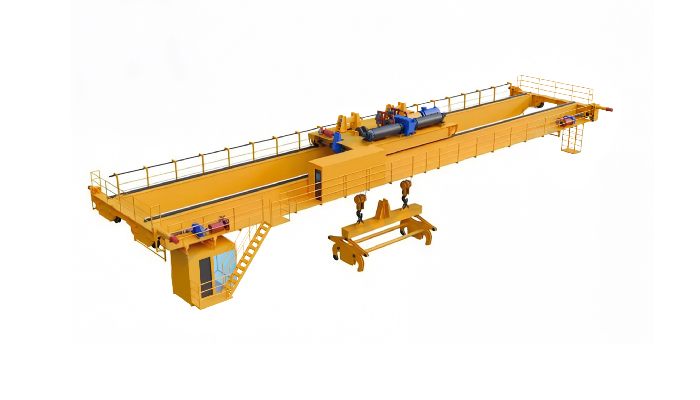
YB slab clamp crane
PRODUCT DETAILS
Open+
Close-
Rated lifting capacity 5 t – 200 t
Span 10 m – 40 m
Lifting height 5 m – 30 m
Duty class A6 – A8
Environmental adaptability Can handle slabs with a thickness of more than 150 mm and a high temperature of up to 650°C
Deion
The slab handling crane is a special lifting device dedicated to the metallurgical industry for handling and stacking high temperature slabs after continuous casting or rolling. It is an essential crane in slab continuous casting and hot continuous rolling processes. It is used to clamp red hot slabs (up to ≤900°C) from the continuous casting line, transport them to soaking pits for heat retention or stack them in the workshop, and load slabs onto vehicles for transport to the rolling mill, where the slabs are stored or charged into furnaces. It can also be used in finished product warehouses to handle cold slabs for stacking, storing, and truck loading/unloading. The crane can handle slabs or large blooms with a thickness of more than 150 mm, and when handling high temperature slabs, the temperature can exceed 650°C.
Its lifting attachments include clamps, hooks, electromagnets, or combinations of two or three of these. The core difference between a slab handling crane and an ordinary overhead crane is that it operates in harsh conditions with high temperatures, dust, and frequent impacts, thus requiring much higher heat resistance, lifting stability, and overall reliability than conventional lifting equipment.
Structure and main components
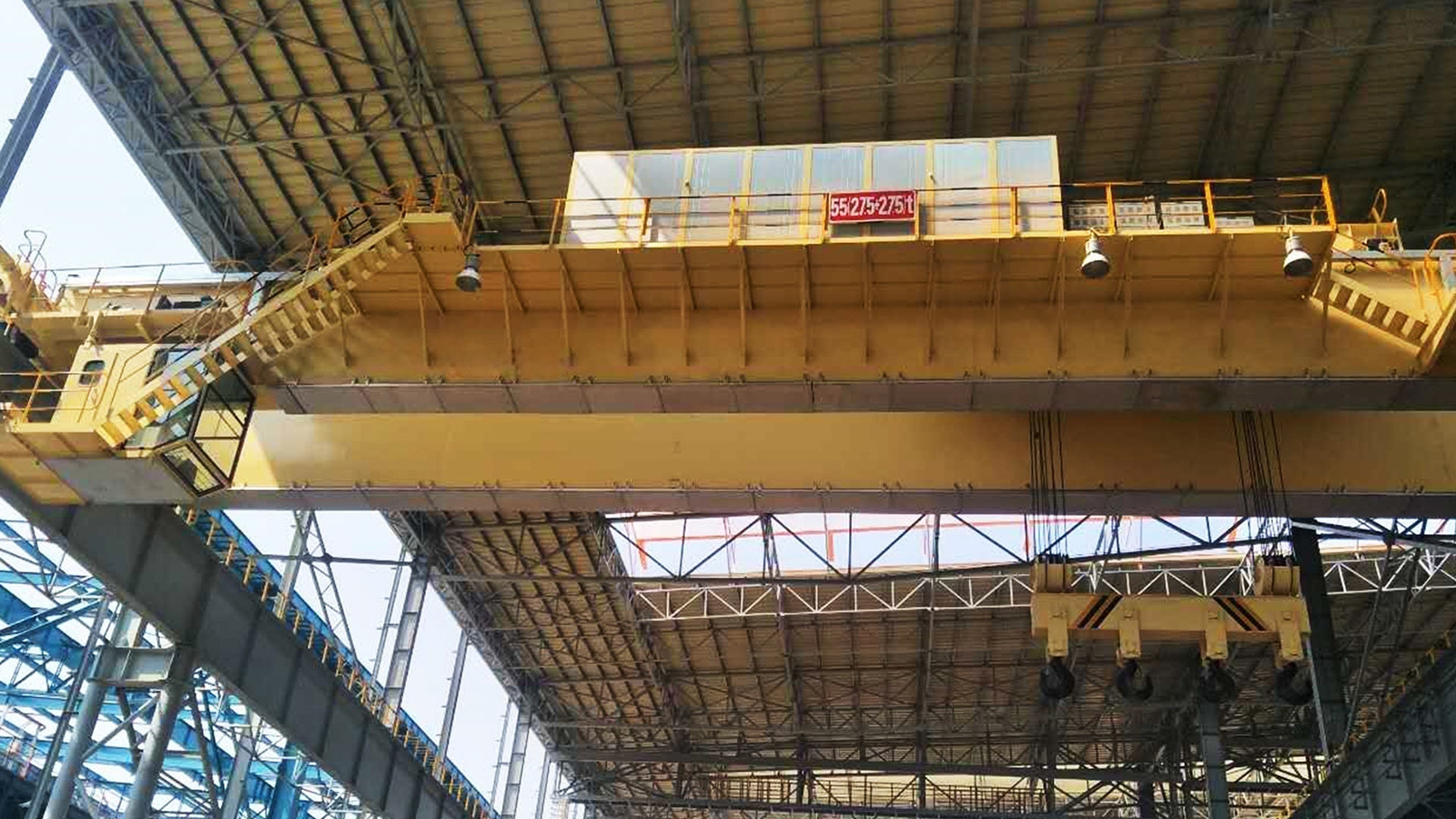
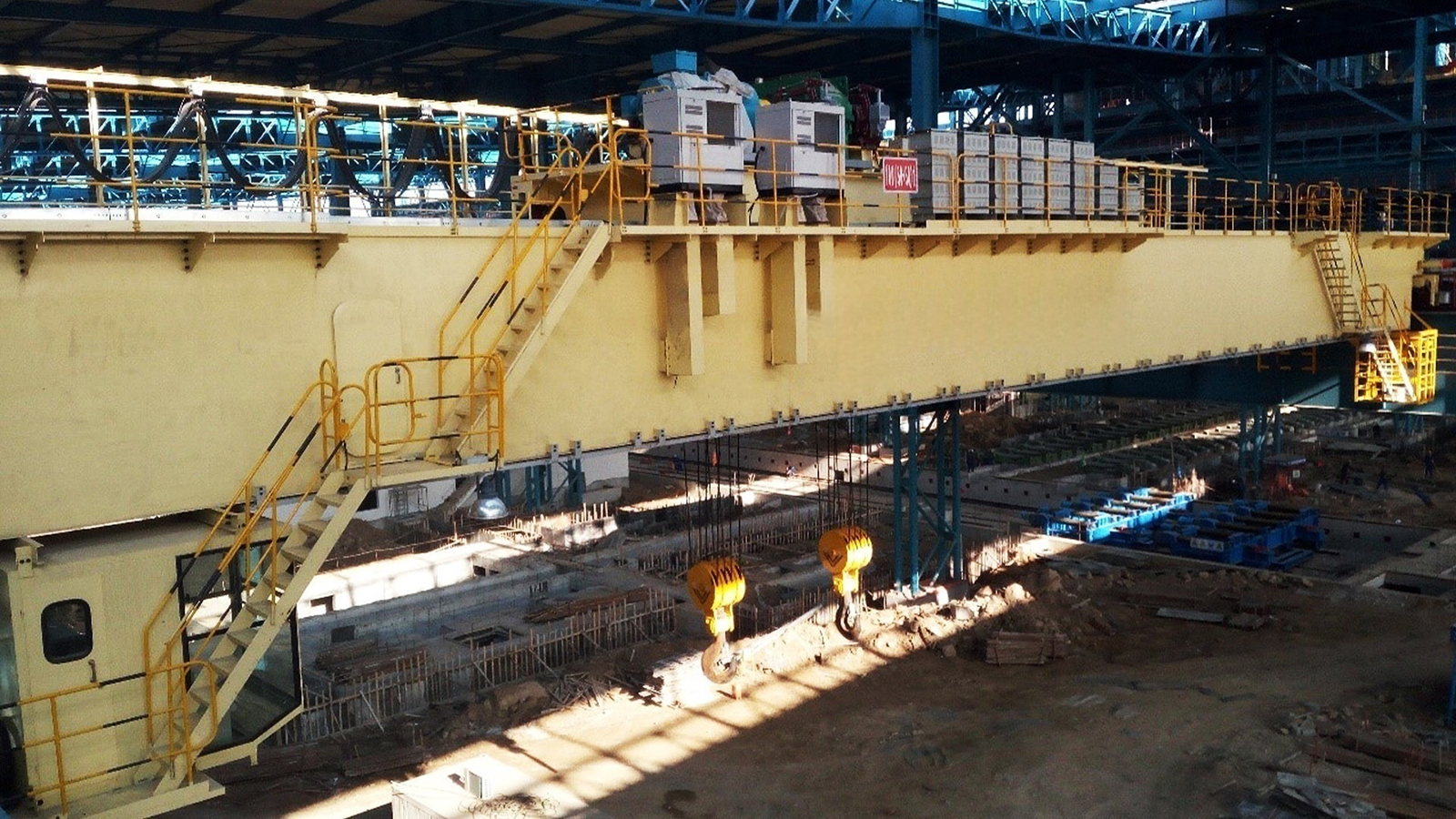
The slab handling crane usually adopts a double girder overhead crane structure and mainly consists of the following parts:
Bridge: The main girder is an off track box section structure. The crane travel mechanism and electrical control equipment are placed inside the main girder for easy inspection and maintenance. The hoisting mechanism is connected to the bridge with a flexible connection, ensuring reasonable load distribution and quick, convenient installation.
Hoisting and travel mechanisms: The hoisting mechanism is responsible for raising and lowering the lifting attachment and the load; the crane and trolley travel mechanisms achieve longitudinal and transverse movement. The hoisting, crane travel, and trolley travel mechanisms all adopt frequency control or stator voltage regulation technology, with a speed regulation ratio of up to 1:10, ensuring smooth lifting and travel with low impact.
Special lifting attachments: Equipped with clamps, electromagnets, or hooks as lifting attachments. Different clamps can be selected flexibly according to the size (thickness, length, number of pieces, etc.) and weight of the material being handled.
Electrical system: The main electrical equipment is placed inside the main girder and equipped with industrial cooling fans to ensure good working conditions and a suitable temperature in high temperature environments; the operator's cab is also equipped with a dedicated cooling fan for cranes.
Types of lifting attachments
The lifting attachments of slab handling cranes are mainly divided into the following types:
Mechanical clamps: Use a precision mechanical linkage structure, relying on the load gravity and the pulling force of the hoisting mechanism to automatically clamp and release slabs. The jaws adopt a special serrated design to enhance friction, preventing slippage even at high temperatures (up to 1000°C). They can adapt to different slab sizes from 5 to 150 tons. The mechanical structure is robust and simple, requires no additional power source, and has low maintenance costs.
Electromagnetic spreaders: Use electromagnetic force to lift materials. Suitable for handling thin slabs, small billets, or applications requiring frequent loading/unloading. The electromagnetic force is evenly distributed, avoiding mechanical damage to the slab surface. Fast pick up and release significantly shorten the handling cycle, making them particularly suitable for high volume continuous production lines. They are also equipped with backup power supply systems to prevent material falling in case of sudden power failure.
Combination spreaders (two in one / three in one): Clamps, electromagnets, and hooks can be used in pairs or all three together to meet various working conditions.
Main application scenarios
1.Continuous casting bay:Clamp high temperature slabs from the continuous casting line and transport them to slab yards, soaking pits, or reheating furnaces; can handle slabs above 650°C
2.Reheating furnace charging / mill feeding:Feed slabs into the reheating furnace, or after removal from the furnace feed them to the rolling mill, achieving material connection between continuous casting, heating, and rolling processes
3.Finished product warehouse handling and stacking:Handle cold slabs for storage, stacking, and truck loading/unloading
4.Steel mills / shipbuilding:Load, unload, and handle steel slabs, sections, and other materials; also suitable for shipyards, ports, storage yards, and other fixed bays
PRODUCT INFO
Open+
Close-
Features
High temperature resistance and heavy load adaptability: The main structure is made of high‑strength heat‑resistant steel, and key components (motors, reducers, bearings, etc.) are equipped with high‑temperature protection devices. The electrical system uses dustproof and waterproof enclosures to ensure stable operation in harsh conditions of high temperature and dust.
Smooth operation with low impact: The hoisting mechanism adopts stator voltage regulation, while the crane and trolley travel mechanisms use frequency control, providing a wide speed regulation range, smooth starting and stopping, and effectively reducing mechanical impact on the equipment.
Precise control and high efficiency: Advanced frequency control technology is used, allowing fine adjustment of the lifting speed. It enables both slow and precise positioning as well as fast no‑load lifting and lowering, offering flexible operation.
Accurate positioning: Structural components are machined as complete assemblies to ensure installation accuracy. With PLC control and a fault detection system, the operating status can be monitored in real time.

PRODUCT PHOTO

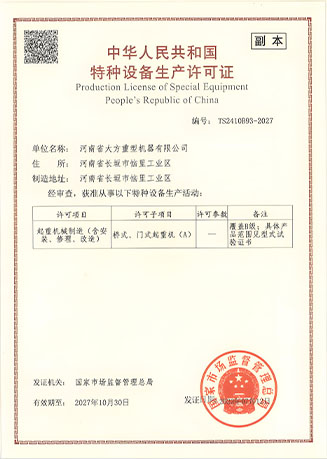
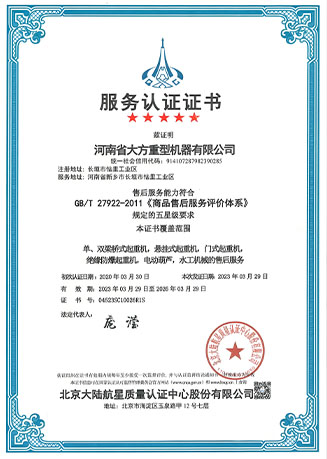
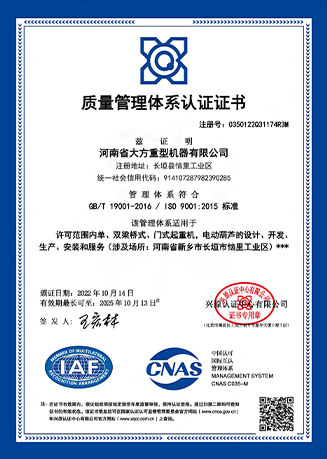
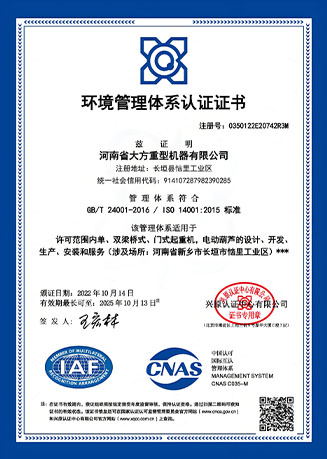

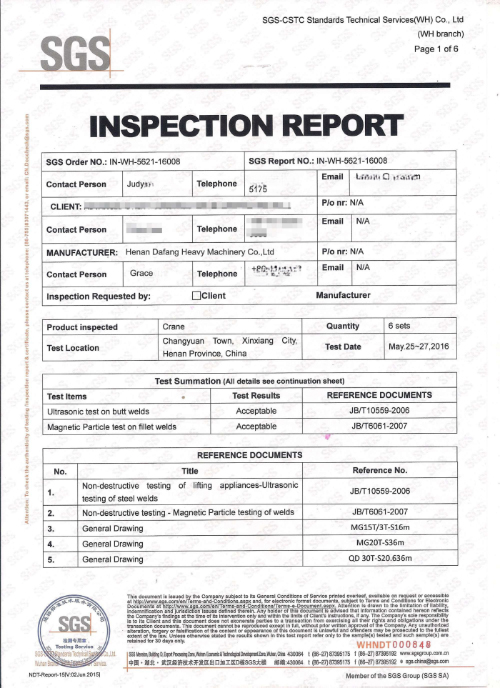
Certificate