Products





24 HOURS SERVICE


CUSTOM SERVICE


INSTALLATION SERVICE


INTELLIGENT SCHEME


PRODUCTION PROCESS
PRODUCT
PRODUCT
Open+
Close-
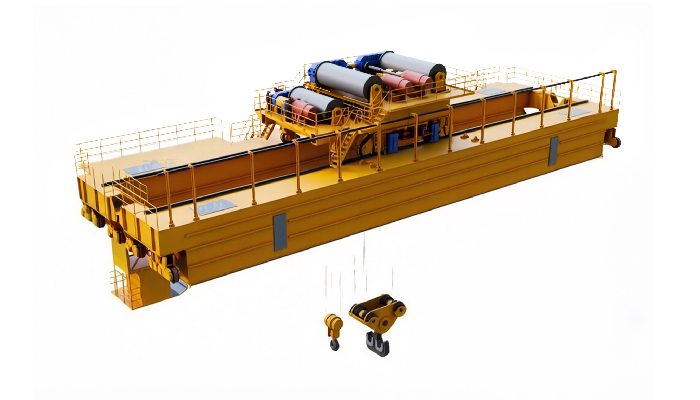
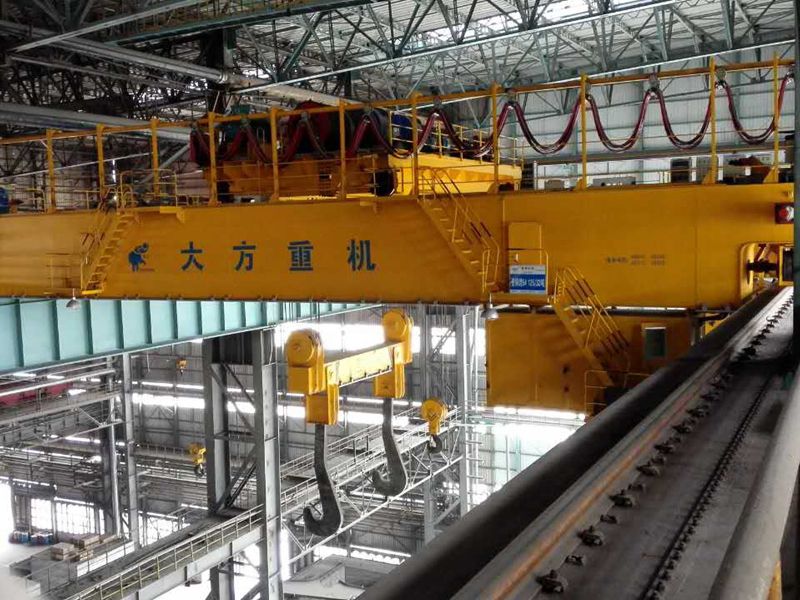
Double-beam casting crane
PRODUCT DETAILS
Open+
Close-
Capacity 5 – 350 t
Span length up to 31.5 m
Duty class A7 – A8
Working ambient temperature –10°C to +60°C
Working environment High temperature, dusty, harmful gases, thermal radiation
Application Mainly used for handling molten metal
Deion
The YZ type ladle overhead crane is a high‑performance lifting device specially designed for the metallurgical and foundry industries. It is primarily used for charging hot metal into converters, transporting ladles to refining furnaces, and delivering ladles to the rotating table of continuous casting machines, thereby completing key steps in the steelmaking process.
The overall structural design of the ladle crane fully takes into account the harsh conditions of the metallurgical and foundry environment, such as high temperature and dust. The ladle crane uses heat‑resistant and dustproof materials and is equipped with multiple safety protection measures to ensure reliability and durability under complex working conditions.
Structure
The crane mainly consists of the main girders, end carriages, hoisting trolley, trolley travel mechanism, and electrical control system.
Main frame: Composed of the main girders and end carriages. They generally adopt a high‑strength, high‑rigidity box‑section structure capable of withstanding heavy loads and impact loads. Rails for the hoisting trolley are laid on the main girders. The end carriages connect the two ends of the main girders, support the entire overhead crane, and allow it to move along the workshop rails.
Hoisting trolley (core component): Includes the hoisting mechanism, travel mechanism, and lifting device. The hoisting mechanism raises and lowers heavy loads, while the travel mechanism moves the trolley along the rails on the main girders. The lifting device is designed according to specific requirements.
Trolley travel mechanism: Mounted on the end carriages, consisting of motors, gearboxes, and wheels, it drives the crane longitudinally along the workshop rails.
Electrical control system: Responsible for coordinating the operation of various mechanisms, typically including a main control cabinet, an operator’s console, and safety protection devices. Various optional functions can be integrated according to specific operational needs, such as a rotatable lifting device for enhanced flexibility, adjustable hooks to accommodate different ladle sizes, and a load weighing and display system for precise control and safety monitoring.
Structural configurations
Ladle cranes are available in different structural designs, including double‑girder double‑rail, four‑girder four‑rail, and four‑girder six‑rail configurations, to meet different capacity and operation requirements.
Double‑girder double‑rail ladle crane: Suitable for small to medium capacity, typically for loads up to 140 t. The overhead crane adopts a double‑girder double‑rail structure, usually with a single‑trolley hoisting system having main and auxiliary hoisting mechanisms.
Four‑girder four‑rail ladle crane: Suitable for large capacity, typically for loads of 160 t or more. The bridge adopts a four‑girder four‑rail structure; the main and auxiliary trolleys both run on double rails. The electrical room is located inside the main girder.
Four‑girder six‑rail ladle crane: Suitable for extra‑large capacity, typically capable of handling 320 t or more. The overhead crane adopts a four‑girder six‑rail structure with main and auxiliary trolleys. The main trolley runs on four rails, distributing wheel loads, improving load‑bearing conditions, and enhancing structural stability. The electrical room is located inside the main girder.
Application scenarios
Converter steelmaking workshop: In the charging bay, hot metal is charged into converters; in the ladle bay, molten steel is transported to refining furnaces.
Refining workshop: In the refining bay, ladles are transported to refining stations.
Continuous casting workshop: Processed molten steel is transported to the continuous casting turntable.
Iron and steel smelting: In steelmaking workshops, it is used for lifting high‑temperature heavy materials such as ladles, hot metal transfer ladles, furnace charges, and ingots. Its heat‑resistant design and stability ensure safe operation in high‑temperature environments.
High‑temperature material handling: Also suitable for other industrial scenarios that require handling high‑temperature materials, such as glass manufacturing and non‑ferrous metal smelting.
PRODUCT INFO
Open+
Close-
Core Features
1.High temperature resistance and multi‑layer heat insulation design: To counter heat radiation, the crane is equipped with a heat insulation layer on the bottom of the main girder along the span direction. An industrial cooling fan is installed inside the electrical room of the main girder, and the motors are provided with thermal protection devices. The operator’s cab uses tempered glass with a heat‑insulating coating. The wire rope is a high‑temperature‑resistant steel‑core wire rope. The sheave sets on the hook block or lifting device, as well as the fixed sheave sets on the trolley, are fully enclosed to adapt to operation in high‑dust environments. All motors have insulation class H and protection class IP54.
2.Main/auxiliary hook coordination and safety redundancy: The crane adopts a coordinated design of the main and auxiliary hooks – the main hook is responsible for lifting, while the auxiliary hook assists in tilting/pouring. The hoisting mechanism is equipped with a dual‑brake system. If one motor or the electrical control system fails, the other drive system can still complete a full working cycle under rated load. The crane is also equipped with safety devices such as an overload limiter, an overspeed switch, and an anti‑two‑block limit switch. In the event of a malfunction, the emergency brake on the drum side can be activated quickly to ensure safe lifting. A safety monitoring system is installed on the hoisting mechanism.
3.Smooth and precise operation & control: To ensure stable handling of molten metal, the crane travel, trolley travel, and hoisting mechanisms generally adopt frequency conversion control or stator voltage regulation technology, providing smooth start/stop without impact. Optional features include an electronic anti‑sway system and a precision weighing scale for accurate positioning and real‑time load display.
4.Robust and reliable modular structure: The main girder adopts a sturdy off‑track box‑section structure. In some designs, the main girders and end carriages are connected by high‑strength bolts for easy transport and installation.

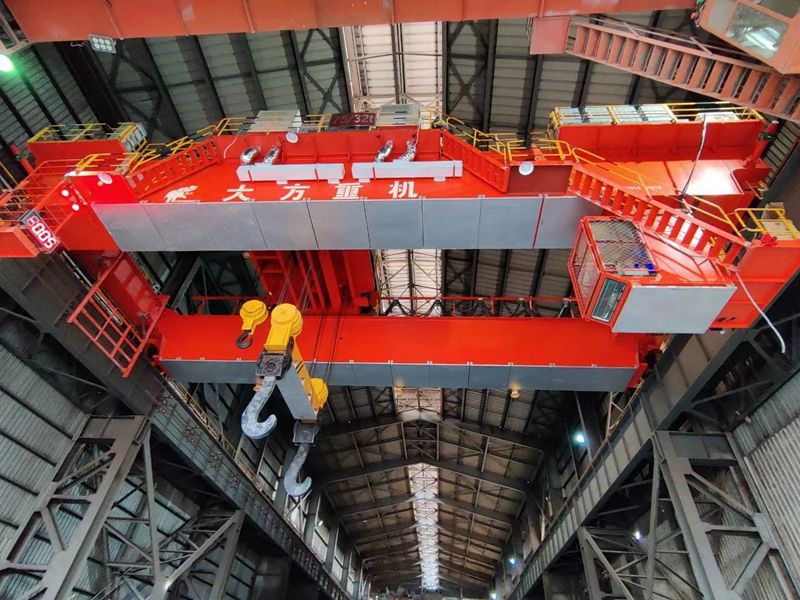
PRODUCT PHOTO

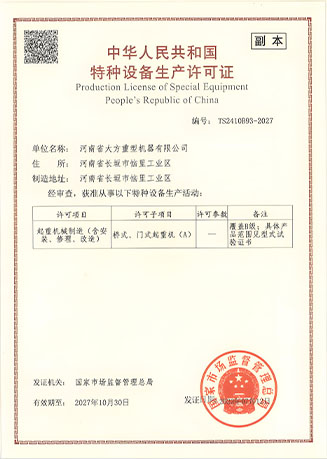
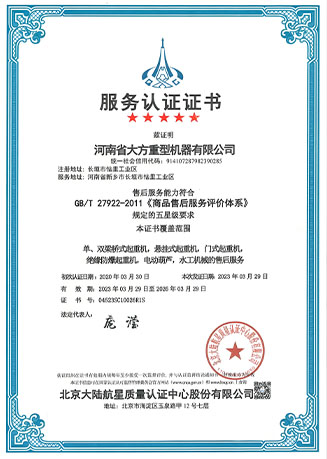
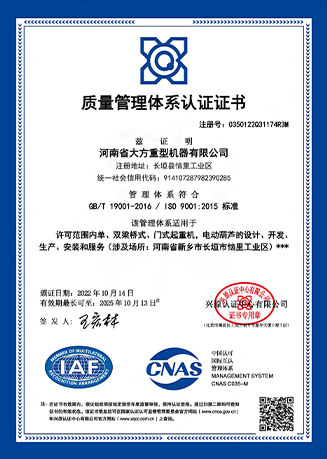
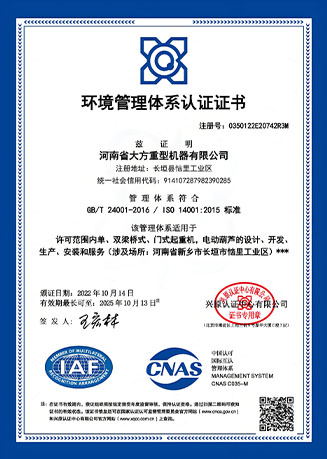
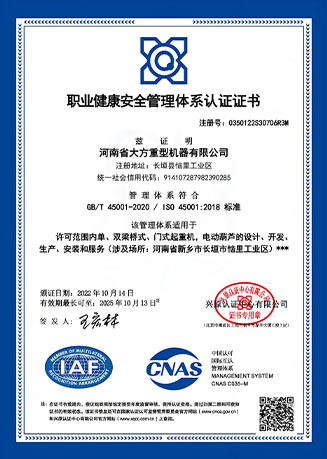
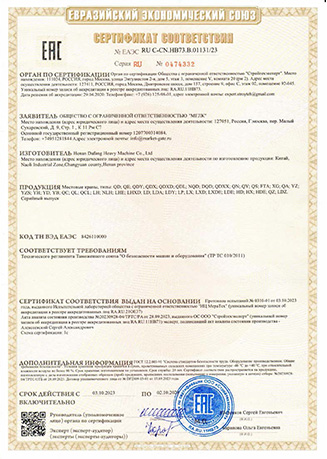
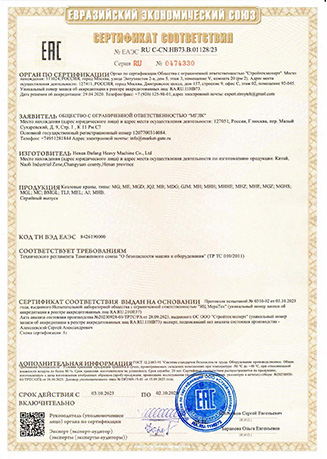
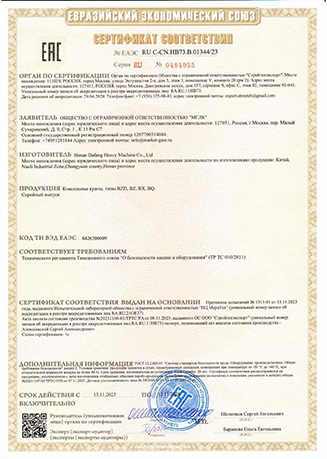
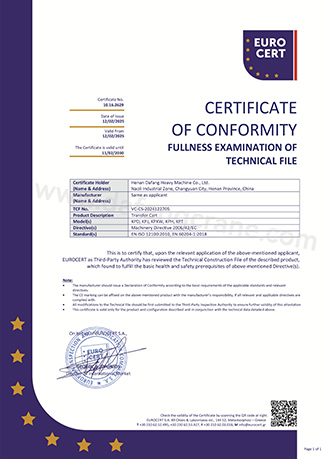
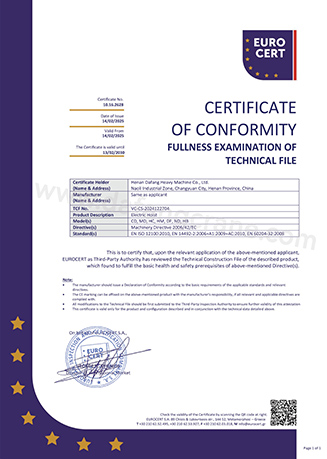
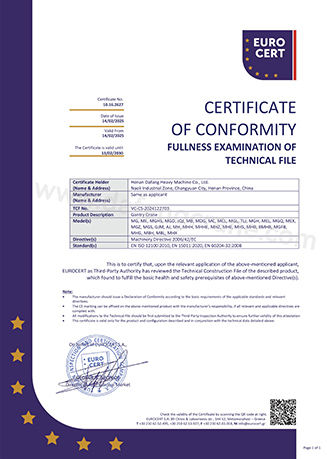
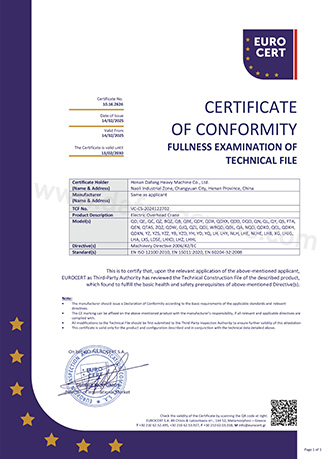
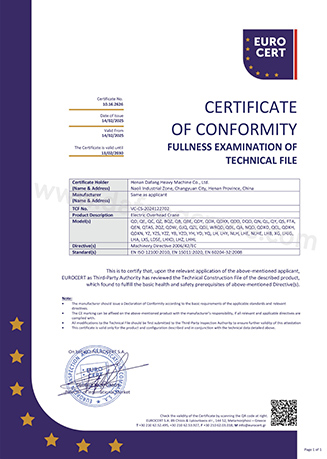


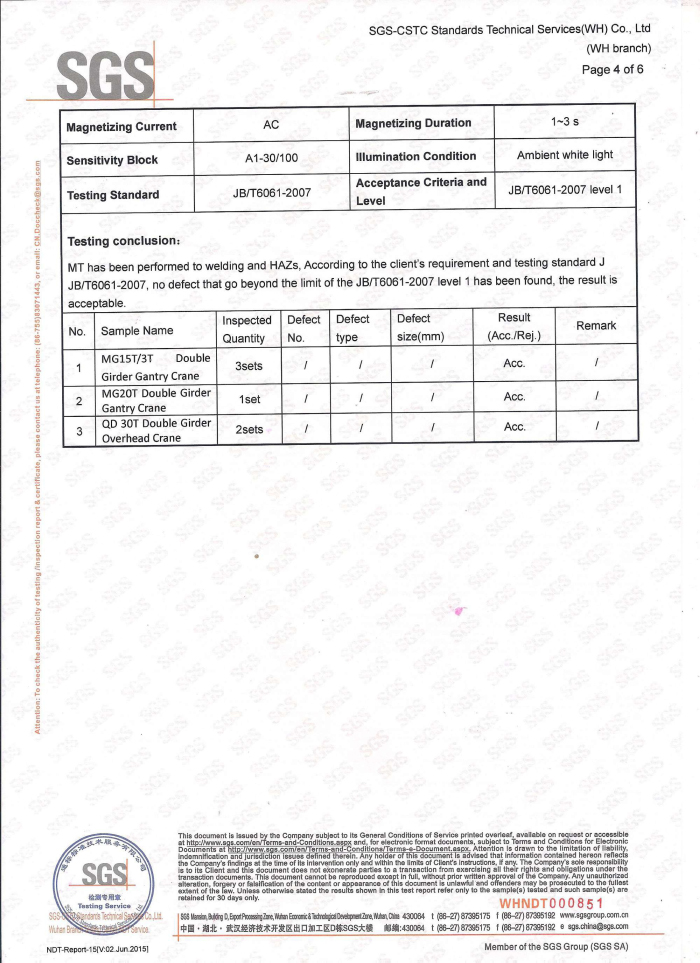
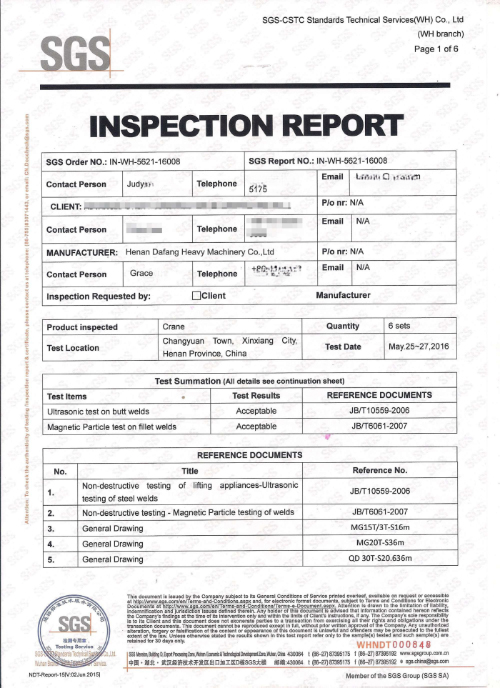
Certificate