Products





24 HOURS SERVICE


CUSTOM SERVICE


INSTALLATION SERVICE


INTELLIGENT SCHEME


PRODUCTION PROCESS
PRODUCT
PRODUCT
Open+
Close-
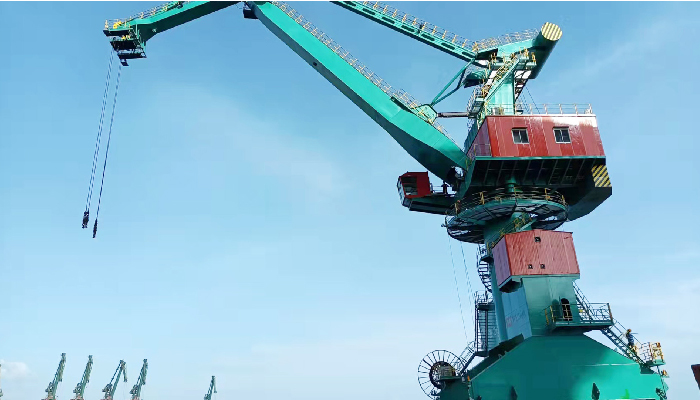
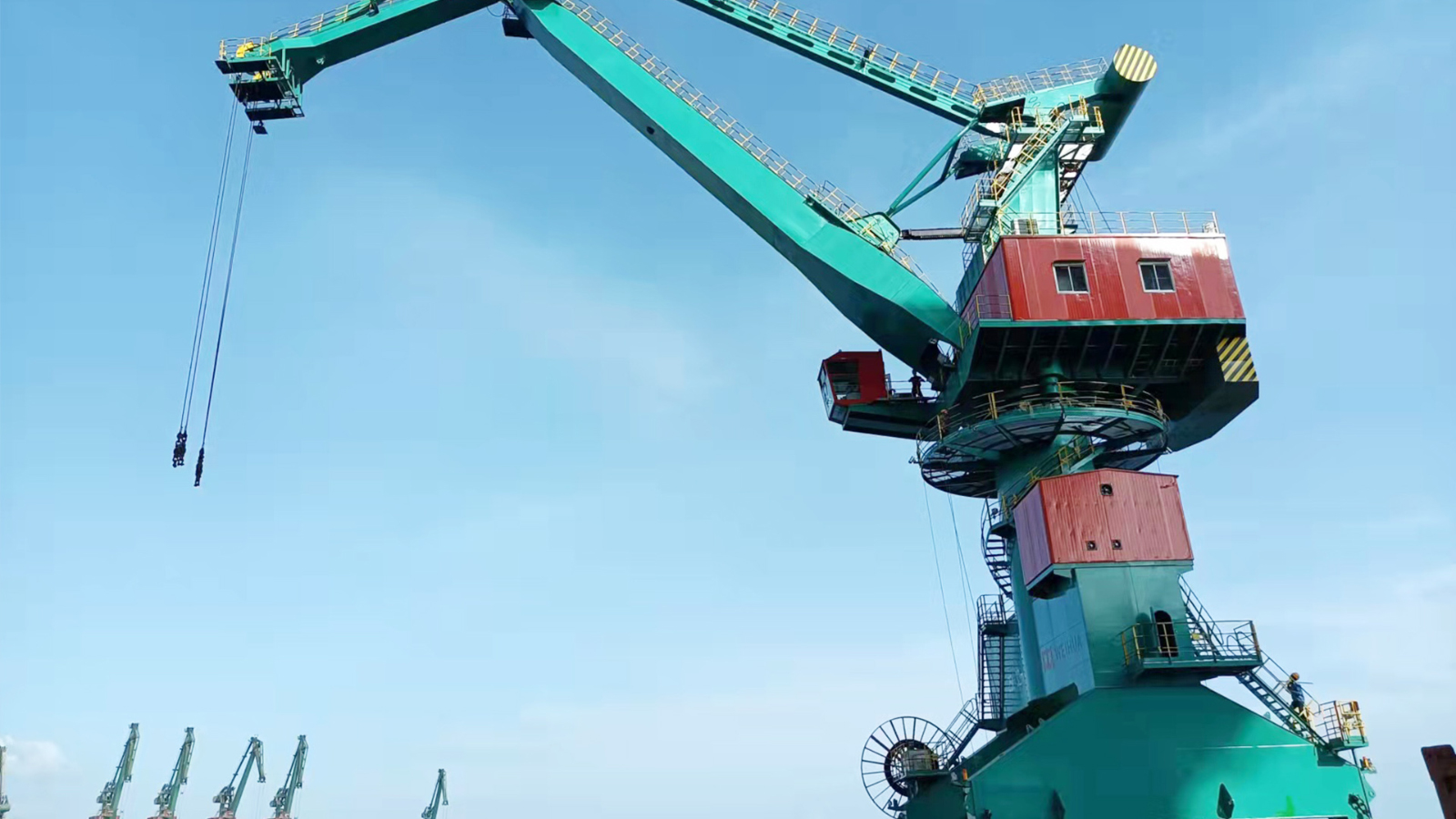
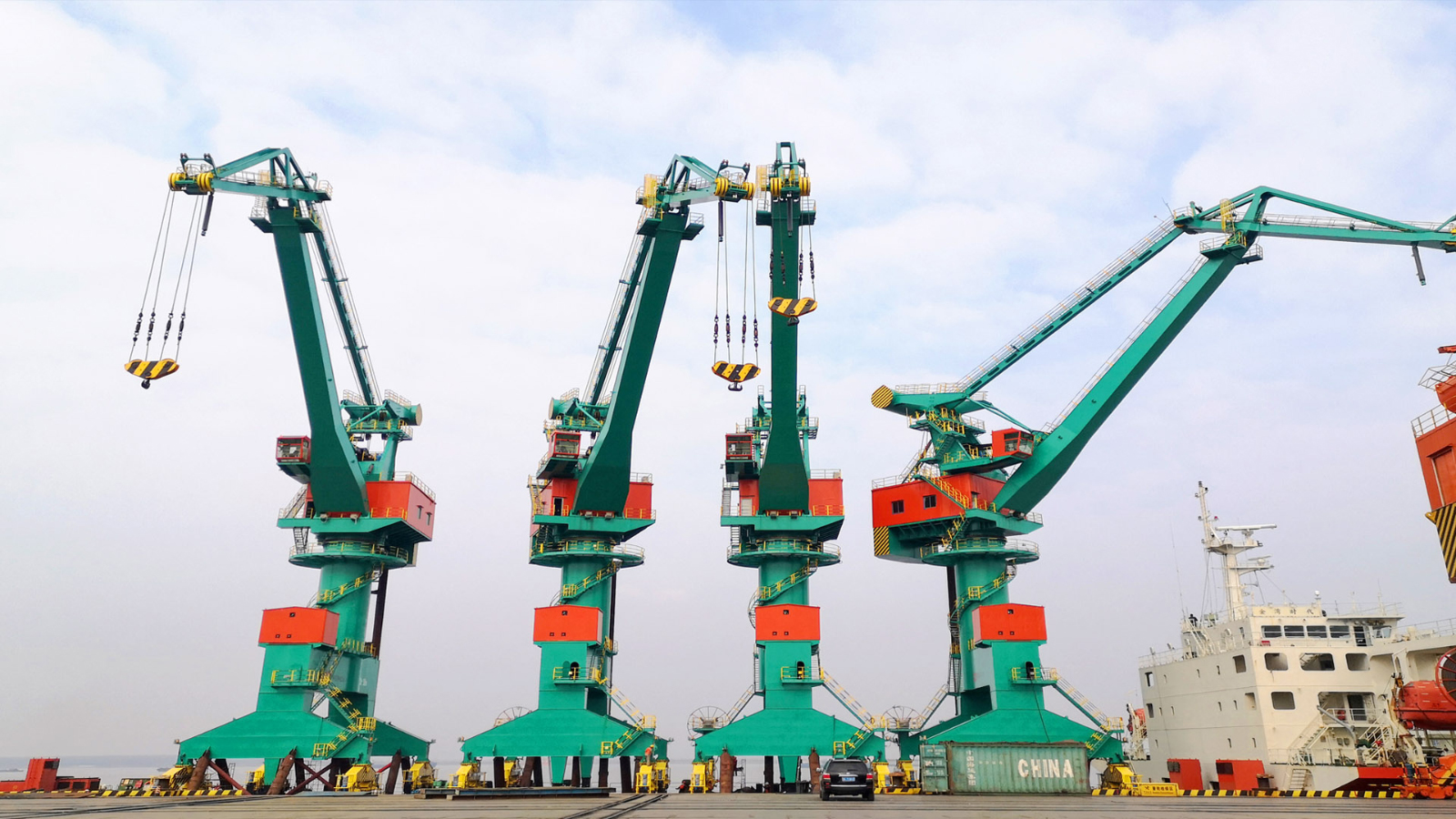
Harbour Portal Cranes
PRODUCT DETAILS
Open+
Close-
Rated lifting capacity 5 t – 25 t
Maximum working radius 20 m – 55 m
Minimum working radius approx. 8 m – 9.5 m
Lifting height (above rail) 10 m – 55 m
Lifting height (below rail) 5 m – 30 m
Duty class A5 – A8
Hoisting speed 25 m/min – 60 m/min
Slewing speed approx. 1.5 r/min (full load approx. 1.2 r/min)
Deion
Portal cranes are widely used in ports, terminals, storage yards and other locations for loading, unloading and transshipping cargo from ships and vehicles. Their design, manufacture and inspection comply with advanced domestic and international standards such as DIN, FEM, IEC, AWS, GB, as well as the latest national standards.
Based on the boom structure, portal cranes are divided into two types: single‑boom and four‑link (four‑bar linkage). Single‑boom portal cranes have a simple structure, large lifting capacity and light deadweight. Four‑link portal cranes use a combined boom system to achieve horizontal movement of the load during luffing, characterised by small vertical displacement, smooth luffing and low power consumption. Both types can meet the handling requirements for general cargo, bulk cargo and containers, offering a wide application range, high operating efficiency and stable overall performance.
Classification by boom structure
Four‑link portal crane (articulated boom crane): Uses a combined four‑bar linkage mechanism. Through horizontal luffing technology, it ensures that the load moves along a nearly horizontal trajectory during luffing. Luffing is smooth, anti‑sway performance is good, there is large clearance under the boom, and the overall height of the crane is relatively low.
Single‑boom portal crane: The structure is relatively simple, with the boom support point located on the slewing platform. The centre of gravity is higher, but the manufacturing process is simpler.
Classification by travel mechanism
Depending on the travel mode, portal cranes can also be classified as rail‑mounted (move on fixed rails), rubber‑tired (equipped with large tyres, can move freely within the yard), fixed (stationary on the ground), or floating (mounted on a vessel for operation). This allows adaptation to different working environments such as ports, shipyards, storage yards and waterways.
Overall structure
The overall structure of a portal crane is divided into two major parts: the slewing part and the travelling part.
Slewing part
The slewing part can rotate 360° relative to the lower portal frame via a slewing bearing. Its main components include:
Boom system: The cantilever structure that directly carries the load, either four‑link or single‑boom.
Luffing balance system: Includes counterweights and balance weights to ensure stability of the centre of gravity during luffing.
Upper slewing column (A‑frame), turntable and slewing column: Form the skeleton of the slewing part, supporting the boom system and the machinery house.
Machinery house and operator’s cab: The machinery house contains the hoisting mechanism, slewing mechanism and electrical control equipment; the cab is for the operator to control the crane.
Hoisting mechanism: Controls the vertical lifting and lowering of the spreader or hook.
Slewing mechanism: Drives the slewing part to rotate 360° horizontally relative to the portal, expanding the working coverage.
Luffing mechanism: Mounted on the luffing platform, it drives the boom to swing, changing the crane’s working radius.
By combining hoisting, luffing and slewing movements, the crane can lift and move loads within a cylindrical space.
Travelling part
The travelling part mainly consists of the portal frame and the travel mechanism. It is the load‑bearing base and moving mechanism of the entire crane:
Portal frame: A welded box‑girder structure. Its width is determined by working conditions, and its height ensures that railway vehicles can pass through the portal opening.
Travel support device: Includes equalising beams, wheels, pins, rails, etc., supporting the crane’s weight and enabling movement on the rails.
Travel drive device: Includes motors, brakes, transmission and reduction devices, etc., driving the entire crane longitudinally along the ground rails to reach different working positions.
Travel safety devices: Include buffers, travel limit switches, rail clamps, anchoring devices and other wind‑resistant and anti‑creep devices, ensuring the crane’s safety under adverse weather conditions.
Application scenarios
Scenario Specific use
General port terminals Handling general cargo (steel, equipment), bulk cargo (coal, ore) and containers – “one machine for multiple uses”. This is the most numerous type in comprehensive ports.
Bulk cargo terminals Equipped with a grab for continuous unloading, with efficiency reaching 800‑1500 tonnes per hour.
Shipyards / dry docks Hull section assembly, electromechanical equipment installation, outfitting, and lifting of large components.
Hydropower and water conservancy projects Concrete lifting and pouring, lifting of hydraulic metal structures, installation of electromechanical equipment for thermal power plants.
Railway freight yards / storage yards Loading/unloading and transshipment of bulk and general cargo, accelerating turnaround of ships and vehicles.
PRODUCT INFO
Open+
Close-
Core Features
High operating efficiency and wide coverage: The portal crane has 360° full‑rotation capability, and its boom system provides a large working radius, effectively covering ship holds and terminal yards, enabling continuous high‑efficiency unloading operations.
Strong adaptability to working conditions and multi‑purpose use: By quickly changing attachments (hook, grab, container spreader, etc.) within 3‑5 minutes, it flexibly adapts to different cargo types such as bulk cargo, general cargo, and containers. It is the main model for general terminals. The multi‑purpose configuration greatly enhances versatility, significantly reducing the need for terminals to purchase multiple dedicated machines.
Smooth operation and precise positioning: The four‑bar linkage combined boom system achieves horizontal luffing technology. During luffing, the load moves along a nearly horizontal trajectory, with the vertical displacement deviation of the spreader controlled within ±20 mm, ensuring stable lifting of goods and avoiding collision or damage risks caused by swinging. Variable frequency drive technology enables precise control and stepless speed regulation of hoisting, slewing, and luffing, greatly improving operational smoothness and positioning accuracy.
High safety redundancy and strong reliability: The whole machine is equipped with safety devices such as a torque limiter, overload limiter, anemometer, rail clamp, anchoring device, etc.

PRODUCT PHOTO

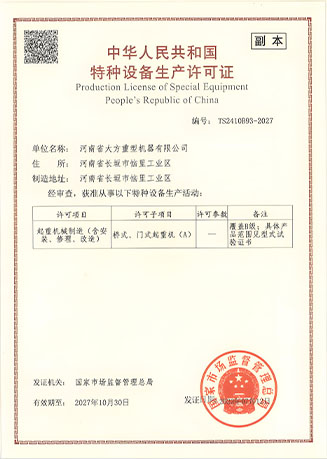
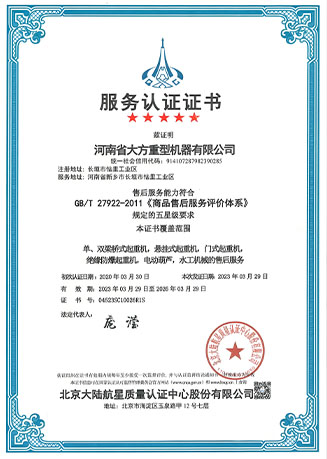
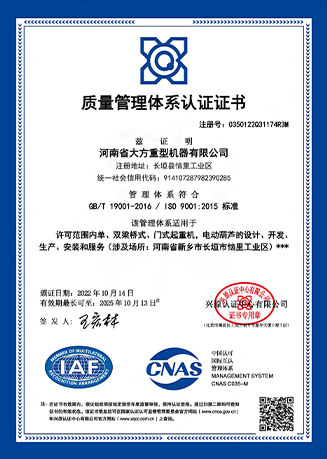
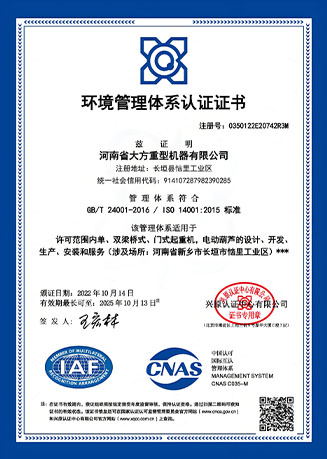
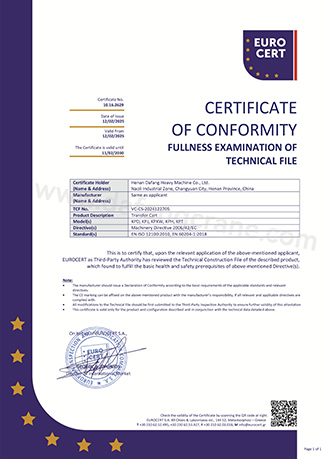
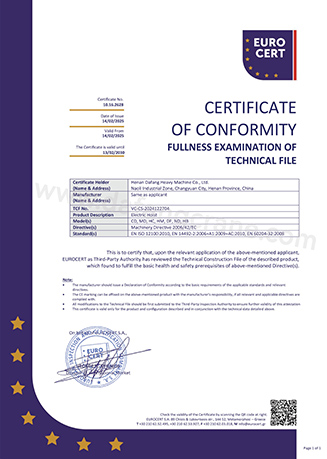
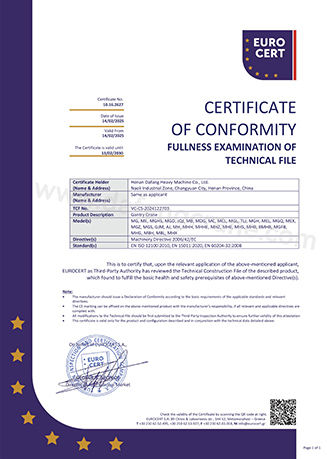
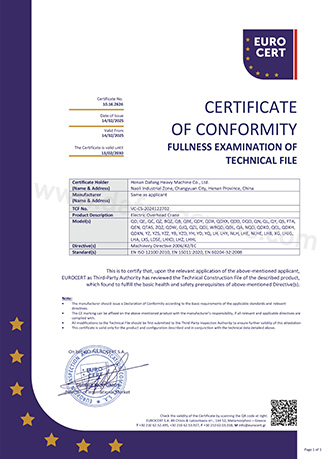
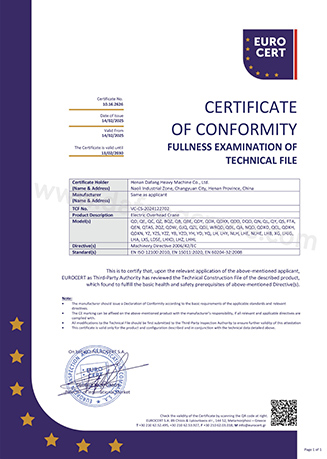


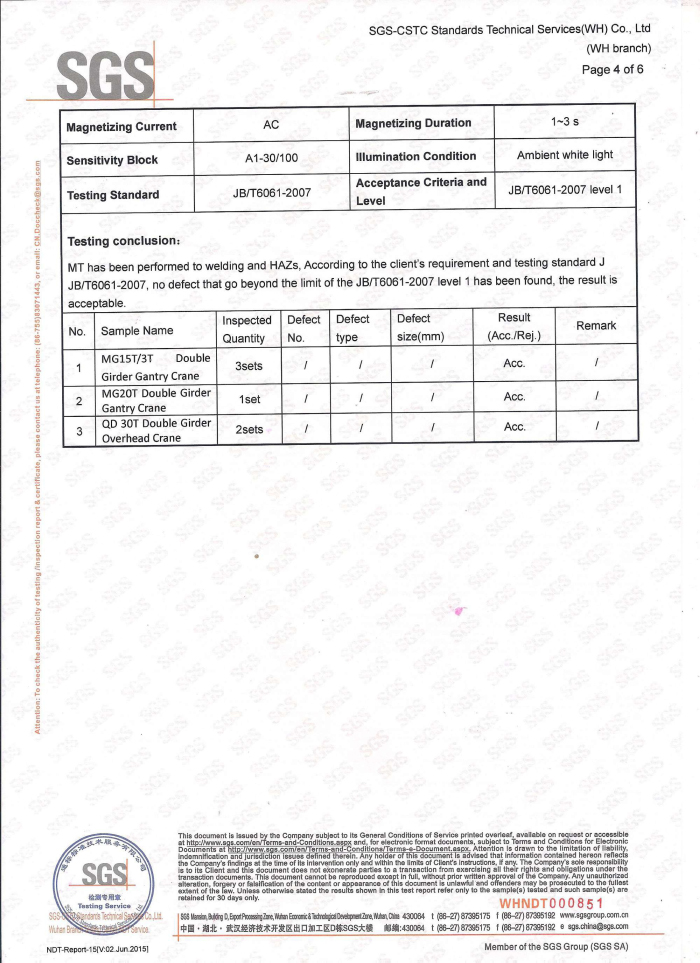
Certificate