Products





24 HOURS SERVICE


CUSTOM SERVICE


INSTALLATION SERVICE


INTELLIGENT SCHEME


PRODUCTION PROCESS
PRODUCT
PRODUCT
Open+
Close-
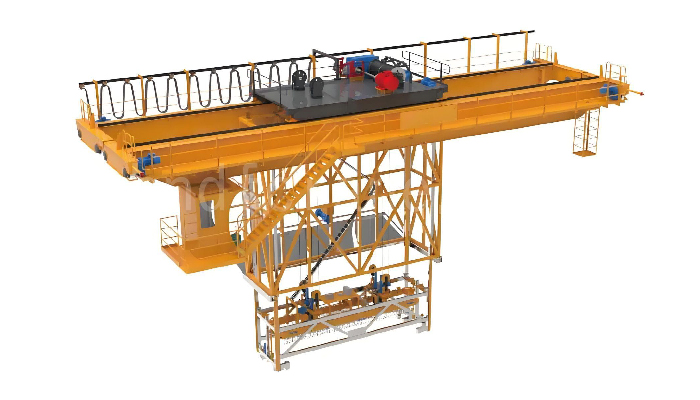
Multifunctional Crane for Electrolytic Copper
PRODUCT DETAILS
Open+
Close-
Lifting capacity-5t – 50t
Span-10m – 34.5m
Lifting height-6m – 20m
Lifting speed-0.5 – 10 m/min
Crane travel speed-20 – 40 m/min
Trolley travel speed-10 – 30 m/min
Duty class-A5 – A8
Positioning accuracy-±2 mm
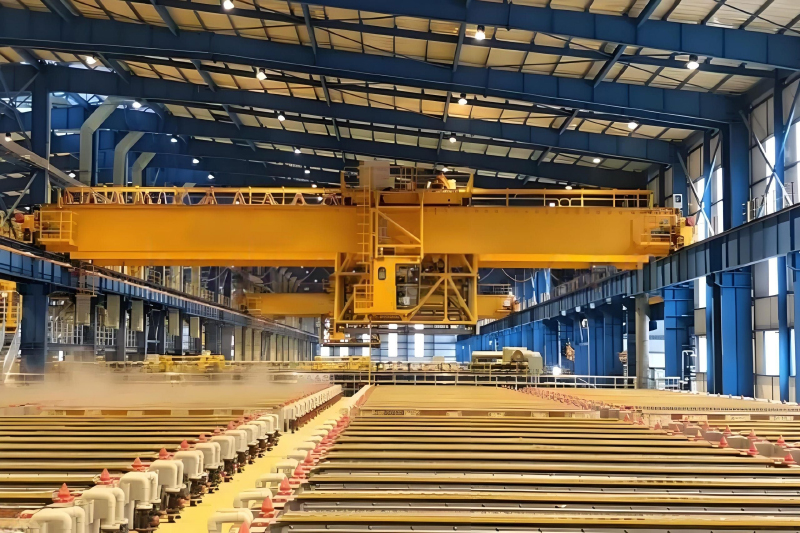
Electrolysis Copper Overhead Crane is an intelligent lifting solution specifically designed for the copper electrolytic refining process. It is mainly used for the automated handling, positioning, and transfer of cathode sheets (starting sheets) and anode plates (blister copper plates) in the electrolysis workshop, making it a key process equipment in modern copper smelting production lines. Unlike conventional overhead cranes, the electrolysis copper overhead crane is specifically designed to operate in harsh electrolytic environments characterized by high humidity, strong corrosion, high electrical currents, and metallic dust. This crane integrates high‑precision positioning, an intelligent control system, and specialized lifting devices to achieve safe, efficient, and stable continuous operation. It is not just a crane, but an intelligent process machine deeply embedded into the production line. Its core value is reflected in three aspects: first, ensuring precise plate insertion into cells with a positioning accuracy of up to ±2 mm; second, achieving independent or combined lifting of cathodes and anodes through a dedicated spreader system, increasing operational efficiency by more than 30%; and third, ensuring long‑term stable and reliable operation in extreme environments with high humidity, strong electrical currents, and metallic dust through special insulation, anti‑corrosion treatment, and an anti‑swing frame. This equipment serves as the core carrier for automation and intelligent upgrading of copper electrolysis production lines, and is a key enabler for ensuring process continuity and improving line efficiency.
The electrolysis copper dedicated crane typically consists of the following core components:
Bridge structure: Box‑girder design with high strength and high torsional rigidity; the surface is treated with a special anti‑corrosion coating to withstand the highly corrosive environment of the electrolysis workshop.
Crane travel mechanism: Dual‑rail independent drive system with variable frequency speed regulation technology, enabling smooth operation and precise positioning (±5 mm); equipped with buffers and limit protection devices at the ends.
Hoisting trolley (lifting carriage): Double‑winch design allowing independent lifting of cathodes and anodes; equipped with load cells and an anti‑swing system, and electrically insulated to prevent interference from operating currents.
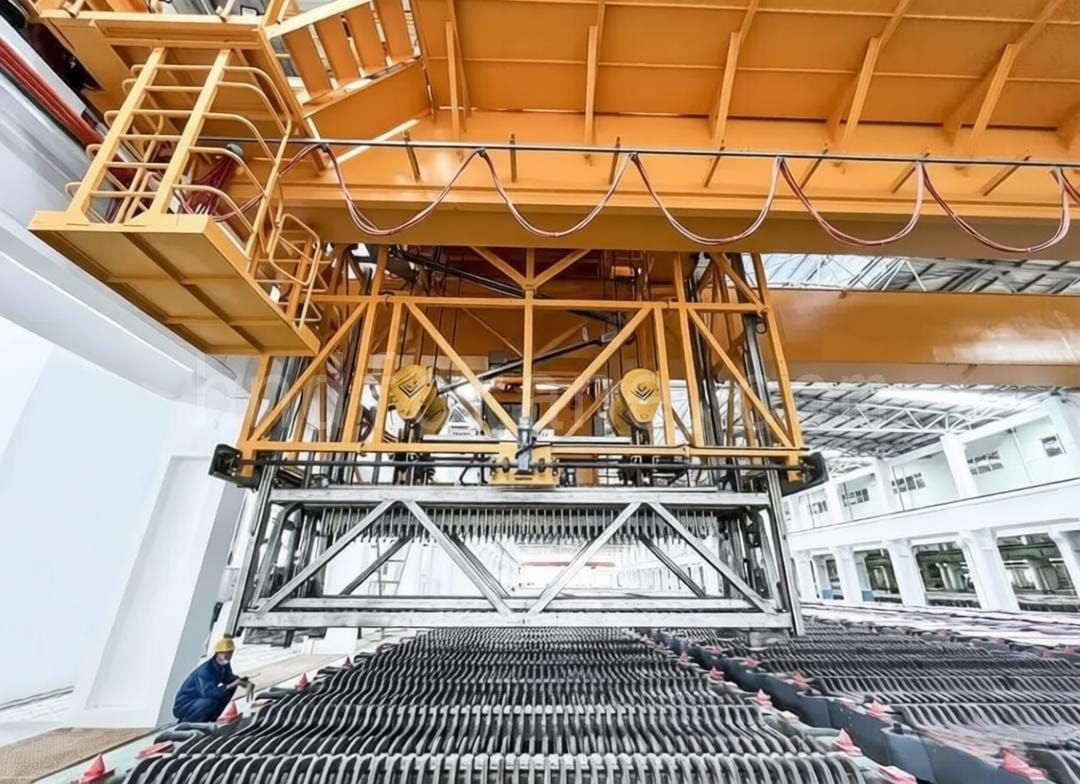
Specialized spreader system (lifting device): The core component. The anode spreader features a multi‑point clamping, anti‑deformation design; the cathode spreader uses a flexible contact surface to protect the copper foil. Made of high‑strength stainless steel with excellent corrosion resistance. A quick‑change mechanism adapts to different plate sizes.
Intelligent control system: PLC + touch screen HMI (human‑machine interface), with automatic calibration and process memory functions. Real‑time monitoring of the operating status of each mechanism and recording of production traceability data.
Drip tray mechanism: Used to collect electrolyte during lifting and transport, preventing splashing. A flat‑push drip tray opens and closes smoothly, reducing electrolyte splashing by up to 95%.
Mobile cabin: An operator's cab that can move along the workshop, equipped with heating and air conditioning to provide a comfortable working environment.
Core Functions and Workflow:
The core functions of the electrolysis copper dedicated crane are closely designed around the process requirements of copper electrolysis production. A typical workflow includes the following four stages:
Anode plate handling: Lifting the anode plates (blister copper plates) to be electrolyzed from the stacking area and precisely loading them into the electrolytic cells according to a preset arrangement sequence.
Electrolysis process coordination: Assisting in adjusting the spacing between electrode plates during the electrolysis cycle to optimize current distribution and ensure stable refining performance.
Cathode plate removal: After electrolysis is completed, removing the cathode plates (on which pure copper has been deposited) from the electrolytic cells and transferring them to a washing or stripping station for subsequent processing.
Spent anode handling: Lifting the remaining spent anode plates and transporting them to a recycling area, completing the continuous electrolysis production cycle.
In addition to the above core processes, the crane also has functions such as electrolytic cell maintenance and auxiliary repair.
Environmental Adaptability:
The electrolysis copper dedicated crane is designed for extreme composite working conditions in non‑ferrous metal smelting, with the following environmental adaptability:
High humidity and acid mist corrosion: The electrolysis workshop constantly contains electrolyte vapor and residual acid mist. Key components such as the crane girder, trolley, and hoisting mechanism are treated with special anti‑corrosion coatings (epoxy or fluorocarbon paint). The entire machine is specially insulated and anti‑corrosion treated to withstand DC electric fields and acid mist corrosion.
High‑current magnetic field interference: Strong magnetic fields generated by high currents exist around the electrolytic cells. The equipment uses electrical insulation design to ensure safe use of the crane and spreader under high‑current environments; it also has a high level of magnetic resistance to prevent magnetic fields from interfering with positioning accuracy and the control system.
Metallic dust: The electrolysis workshop contains conductive metallic dust (copper, copper oxides, etc.), which poses a threat to the electrical system. The equipment uses dust‑proof design and insulation protection technology to address this.
High‑temperature environment: The copper electrolysis process involves high‑temperature electrolyte; the crane must be heat‑resistant, with key components specially treated to adapt to high‑temperature conditions.
PRODUCT INFO
Open+
Close-
Core Technical Features
1. Multi‑function Integration of the Specialized Spreader
The biggest highlight of the electrolysis copper dedicated crane is its specialized spreader system. The spreader is made of high‑strength stainless steel and offers the following functions:
Specially designed plate arranging function and plate pressing device ensure smooth insertion of the initial cathode sheets into the cells.
Supports independent lifting of cathode and anode plates as well as combined lifting, increasing efficiency by 30%.
Combines pre‑positioning and fine positioning to achieve a positioning accuracy of ±2 mm.
Flat‑push drip tray that opens and closes smoothly to prevent electrolyte splashing.
2. Intelligent Control System
PLC + touch screen HMI (Human‑Machine Interface) with automatic alignment and process memory functions.
The HMI operating system displays real‑time coordinates, operation status, and fault information.
Remote diagnosis and remote maintenance system for convenient equipment maintenance and troubleshooting.
Three operation modes – fully automatic, semi‑automatic, and manual – can be flexibly switched.
The HMI operating system provides real‑time display of coordinates, status, and fault information, ensuring flexible and controllable operation.
Three control methods – cab operation, remote control operation, and ground station operation – meet the requirements of automated workshop production lines.
Four‑motor structure with deviation correction function, significantly improving stability and reliability.
3. High‑Precision Positioning Technology
Adopts a two‑stage positioning system – pre‑positioning combined with laser precision positioning technology – achieving a repeat positioning accuracy of ±2 mm, ensuring accurate plate insertion into the cells and avoiding collisions or damage.
4. Anti‑Swing Design
Equipped with a sufficiently strong anti‑swing frame, which is directly fixed to the bottom of the trolley via an additional insulation device, ensuring that the plates remain stable and do not swing during lifting and transport.

PRODUCT PHOTO

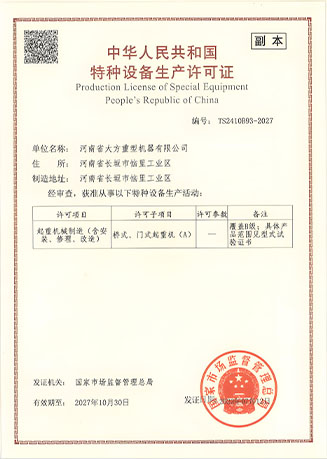
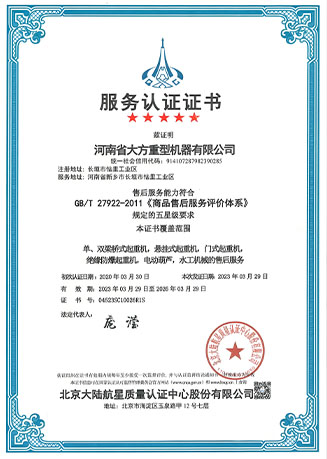
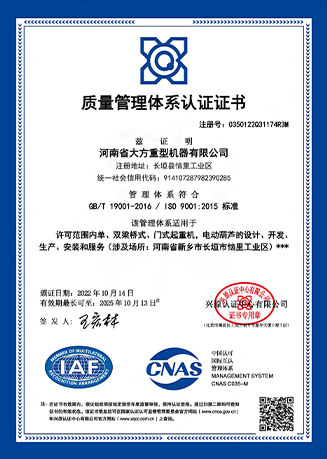
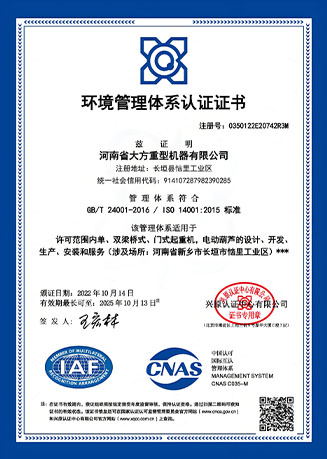
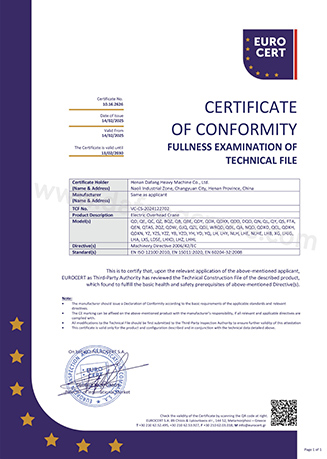


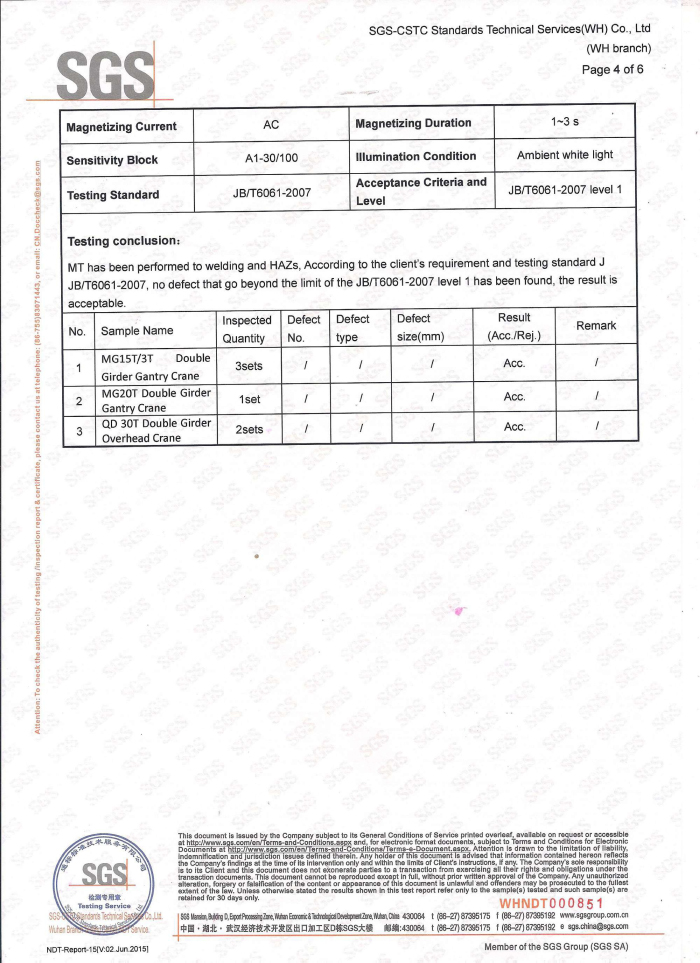
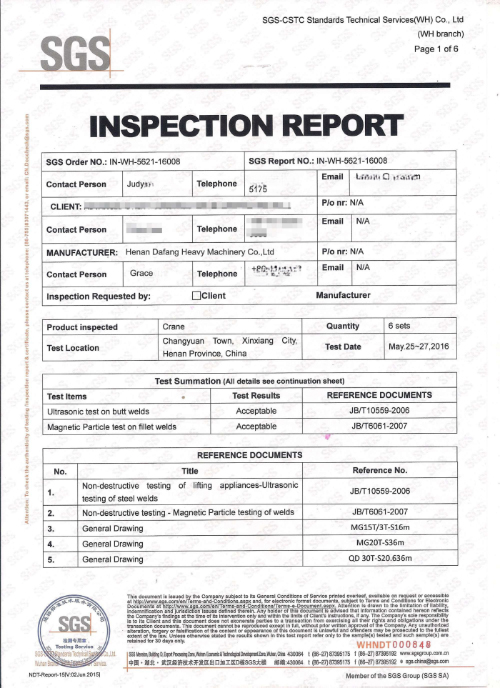
Certificate