Products





24 HOURS SERVICE


CUSTOM SERVICE


INSTALLATION SERVICE


INTELLIGENT SCHEME


PRODUCTION PROCESS
PRODUCT
PRODUCT
Open+
Close-
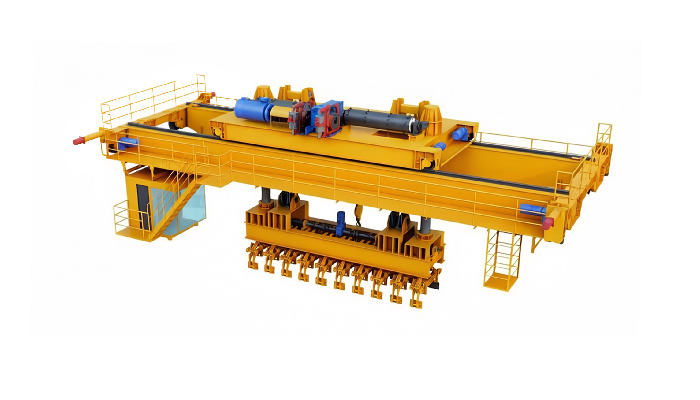
Anode Carbon Stacking Crane
PRODUCT DETAILS
Open+
Close-
Lifting capacity-16 – 80 t
Span-13.5 – 22.5 m
Lifting height-15 – 30 m
Number of blocks per grab -10 – 21 blocks
Stacking layers-6 – 9 layers
Clamp lifting speed-2 – 13.5 m/min
Duty class-A6 – A8
Positioning accuracy-±2 mm
Crane travel speed-6 – 60 m/min
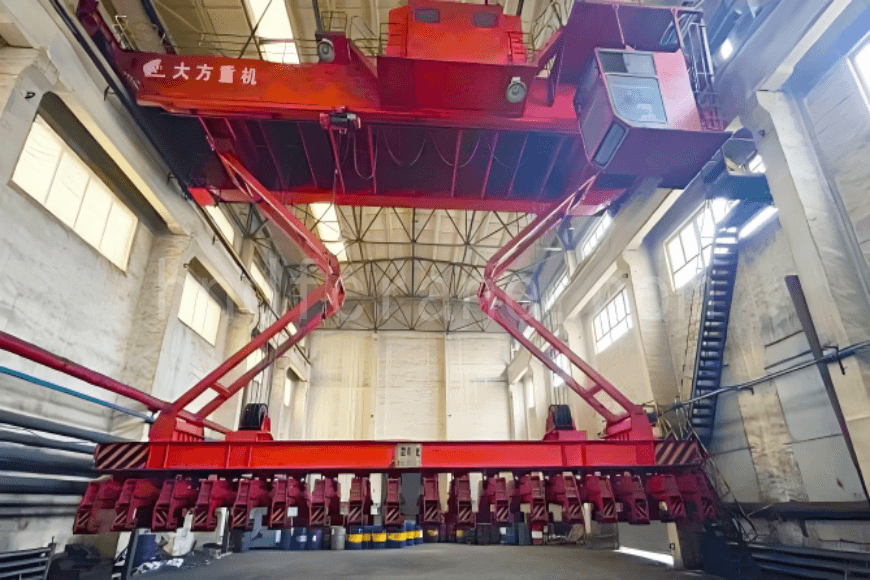
Anode Carbon Block Stacking Crane is a specialized intelligent transfer device used in large prebaked anode aluminum electrolysis plants and carbon plant block warehouses. It is not just a crane, but the core hub of carbon block warehousing logistics, capable of automatically stacking, handling, and loading green (unbaked) anode carbon blocks and baked anode carbon blocks. It serves as a bridge linking upstream carbon production and downstream aluminum electrolysis processes. The crane adopts a high-rigidity bridge structure and is equipped with a high-temperature-resistant clamping system, effectively performing block grabbing, handling, stacking, furnace loading, and unloading operations. The bridge crane mainly consists of a bridge, trolley travel mechanism, hoisting mechanism, guiding device, clamping device, control system, electric hoist, and other components. The carbon block stacking crane uses a box-type double-girder bridge structure. The main girders are welded from high-strength steel plates, offering excellent bending and torsional rigidity to ensure stability under heavy loads. The end carriages are equipped with integrated three-in-one drive units (motor, brake, and gearbox integrated) for smooth wheel travel. The trolley travel mechanism adopts a dual-rail, dual-drive configuration with a variable frequency speed regulation system, achieving precise positioning and anti-swing control to meet high-precision stacking requirements. The lifting height can reach 15–30 meters, meeting multi-layer stacking requirements. The steel wire rope is made of high-temperature-resistant galvanized material, effectively resisting high temperatures and corrosive gases in the baking workshop. The clamp is the core working device, using a double-beam, four-jaw hydraulic clamp suitable for grabbing green anodes (normal temperature) and baked anodes (high temperature). The clamp jaws can withstand temperatures of 300–1000°C. The hydraulic system uses proportional valve control with adjustable clamping force to avoid damaging the carbon blocks. Some models are equipped with automatic centering function to ensure neat stacking of carbon blocks.
The equipment mainly consists of the following systems:
Bridge structure: High-strength box-type or I-beam double-girder structure, providing a stable operating platform.
Travel mechanisms: The crane and trolley adopt dual-drive variable frequency speed regulation for smooth and precise positioning.
Hoisting winch: Used to drive the clamp up and down, typically with a dual-lifting-point, dual-brake configuration to ensure balanced and safe lifting.
Specialized clamp: Depending on the power source, it can be gravity-type (purely mechanical, easy maintenance) or pneumatic-type (smoother operation). Adjustable jaw spacing of ±50 mm to accommodate different block sizes.
Guide device: Prevents the clamp body from swinging during lifting and movement, ensuring accurate alignment.
Auxiliary devices: Including pneumatic system, electric hoist, and an intelligent control system composed of PLC, HMI, and frequency converters.
Workflow: Intelligent Handling from Green Blocks to Baked Blocks
Its workflow is divided into two main stages: sending green blocks from the upstream process into the baking furnace, and then delivering the baked blocks for the next stage of production.
Green block warehousing: Automatically grab green block groups from the briquetting machine → stack them in designated positions in the storage area according to system instructions.
Furnace loading operation: Load green block groups from the storage area into the baking furnace in order.
Furnace unloading operation: Remove the baked high-temperature carbon blocks from the furnace.
Baked block dispatch: Precisely stack the baked blocks onto transport vehicles or transfer equipment. Throughout the process, the equipment can also automatically reject defective blocks and insert replacement blocks from qualified groups.
Environmental Adaptability: Built for Extreme Conditions
High temperature: When handling freshly baked blocks, the clamp must withstand high temperatures of 300°C or even over 1000°C. Therefore, both clamp materials and hydraulic systems are designed with high temperature resistance.
Dust: In the dusty working area, the equipment adopts an overall dust-proof design, effectively protecting core electrical and mechanical components.
Strong magnetic fields: The equipment itself uses anti-interference design to ensure control accuracy in strong magnetic environments such as electrolysis workshops.
Corrosion: Steel components use galvanized steel wire ropes and special anti-corrosion coatings to resist corrosive gases.
Heavy-duty operation: The equipment is designed and manufactured according to heavy-duty, high-frequency duty classes (typically A7–A8) to ensure reliable durability.
Intelligence and Automation
Fully automatic operation: Modern systems have achieved full automation, integrating automatic grabbing, stacking, destacking, and truck loading functions.
Intelligent management: Integrates RFID or QR code identification, continuous material level monitoring, and fault self-diagnosis functions, and seamlessly connects with the plant MES system.
PRODUCT INFO
Open+
Close-
Core Features
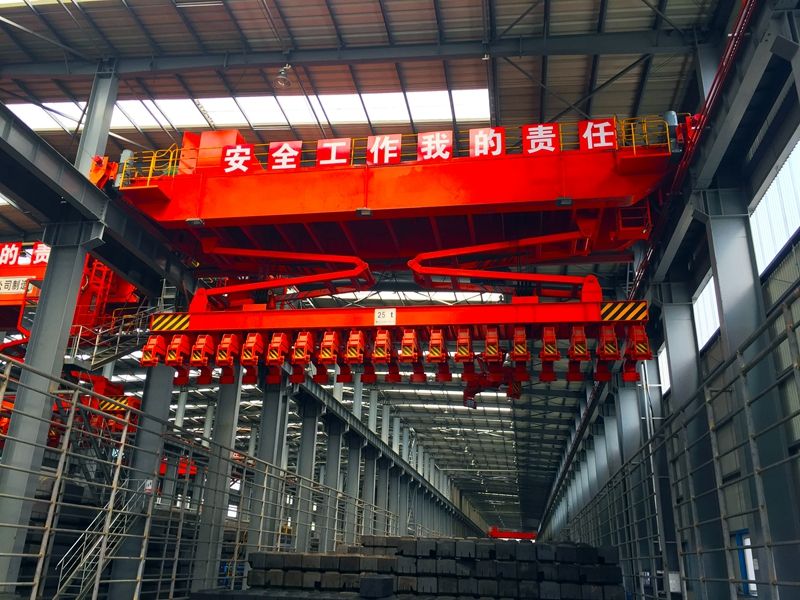
1.High Efficiency – Handling up to 20 tons at a time: The dedicated clamp can grab 10 to 21 anode carbon blocks at once, with a total weight of approximately 20 tons, greatly improving operational efficiency.
2.Intelligent – Fully automatic unmanned operation: The system has achieved full automation, integrating a PLC and variable frequency speed regulation technology. With a laser positioning system (positioning accuracy of ±2 mm), it can perform automatic grabbing and stacking without human intervention.
3.Precise – Stacking as neatly as bricklaying: High‑precision positioning and anti‑swing technology ensure that carbon blocks are stacked neatly like bricks, making full use of warehouse vertical space, with stacking layers reaching 8–9 levels.
4.Reliable – Unaffected by high temperature and dust: The equipment adopts a high‑strength structure and high‑temperature resistant design. The mechanical or gravity self‑locking mechanism of the clamp does not rely on an external power supply, ensuring stable clamping force in high‑temperature and dusty environments.
5.Flexible – One equipment, multiple tasks: The same crane can accommodate the handling needs of different block sizes by adjusting the clamp spacing. In addition to full‑group operations, it can also handle "miscellaneous tasks" such as removing defective blocks and single‑block lifting.
6.Safe – Multiple redundancy design: The equipment features multiple electrical protections such as overspeed and limit switches. The clamp is equipped with a dual‑brake configuration and an anti‑loosening mechanism, ensuring safe and reliable lifting of heavy loads.

PRODUCT PHOTO

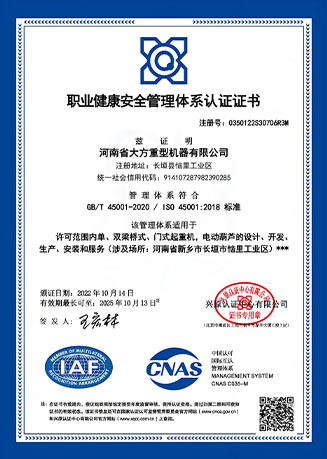
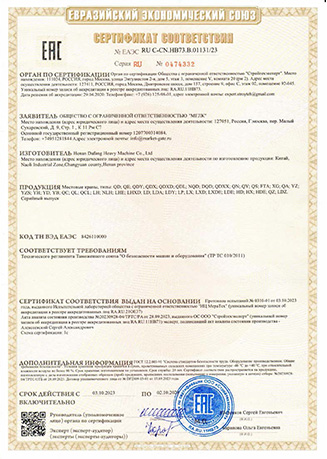
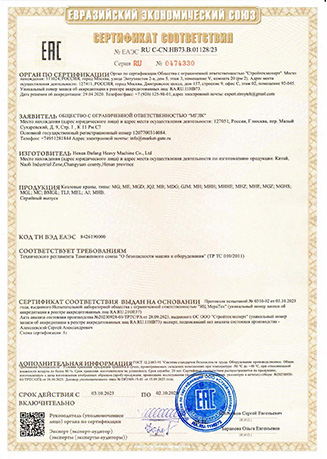
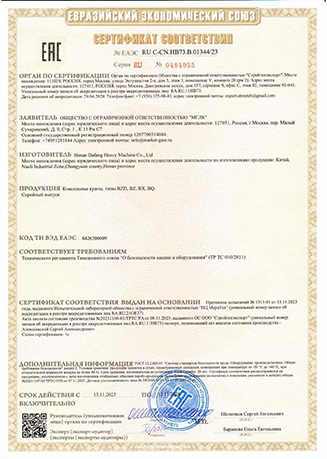
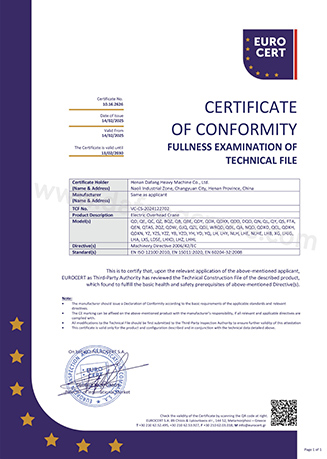


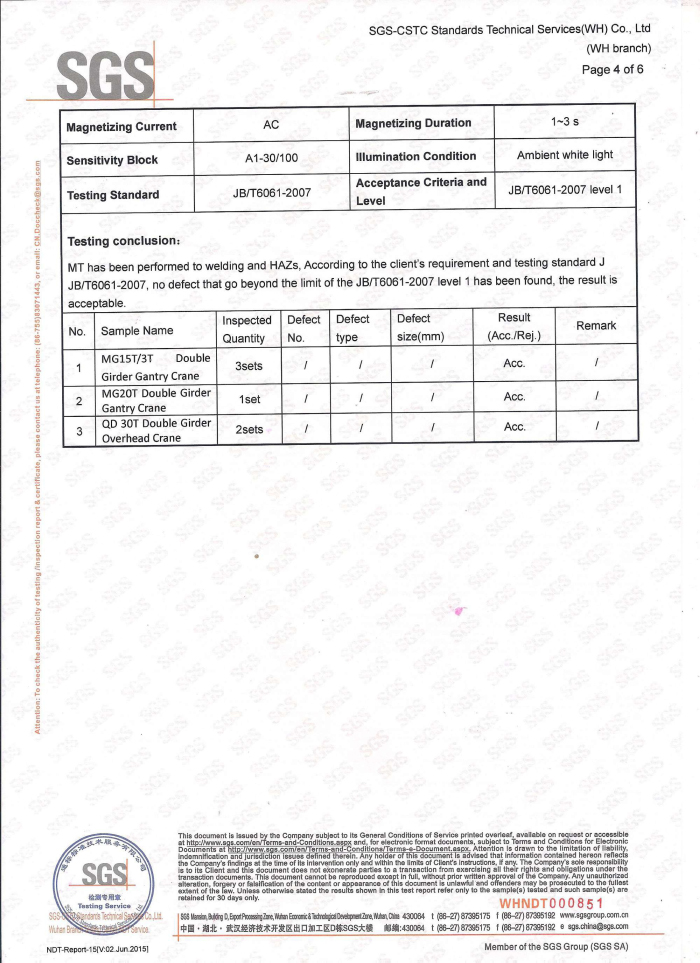
Certificate